
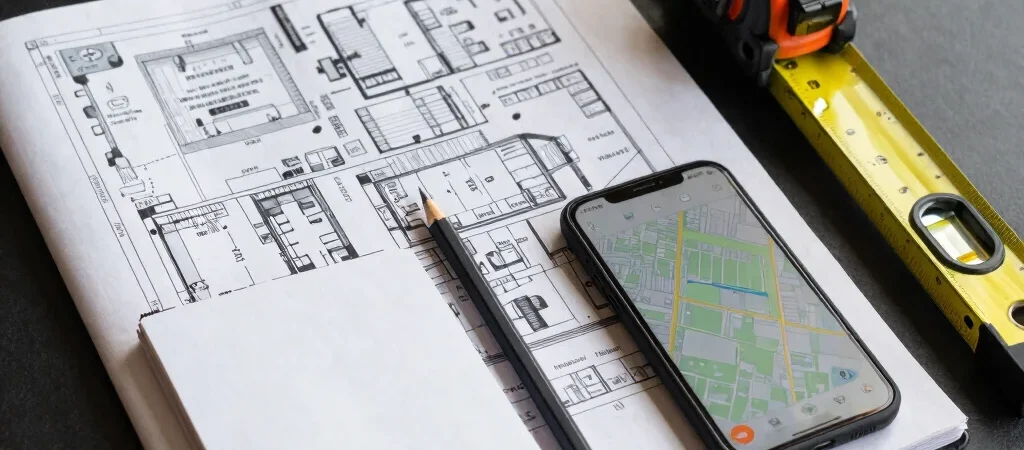
At a site, the useful tool is not always the newest one. A phone can hold plans and notes, but it cannot make an unclear measurement reliable by itself. A small, task-matched kit—and a habit of recording how each reading was taken—does more for a field check than collecting another app.
Choose tools for the question
For a basic distance check, a tape measure may be enough; a level or laser level may suit a different setup, provided the conditions and procedure allow it. Before leaving, ask what needs to be checked, what accuracy the work requires, and whether you have permission and a safe position to take the measurement. Tool choice follows the question, not the other way around.
Make the reading traceable
Record the location, reference point, units, date, and method alongside the result. A photograph can help explain where a reading came from, but it should not replace a clear note or the project’s required documentation. If a result seems off, repeat the measurement from a known reference before treating it as a finding.
Keep the digital side simple
A field calculator, offline drawing, or notes app can reduce friction when signal is weak or hands are busy. Check that files are current and that any calculations use the intended units; a tidy interface cannot catch a mistaken input for you. Pack only the tools that support the task, and leave room for the most important one: a repeatable way to check your work.